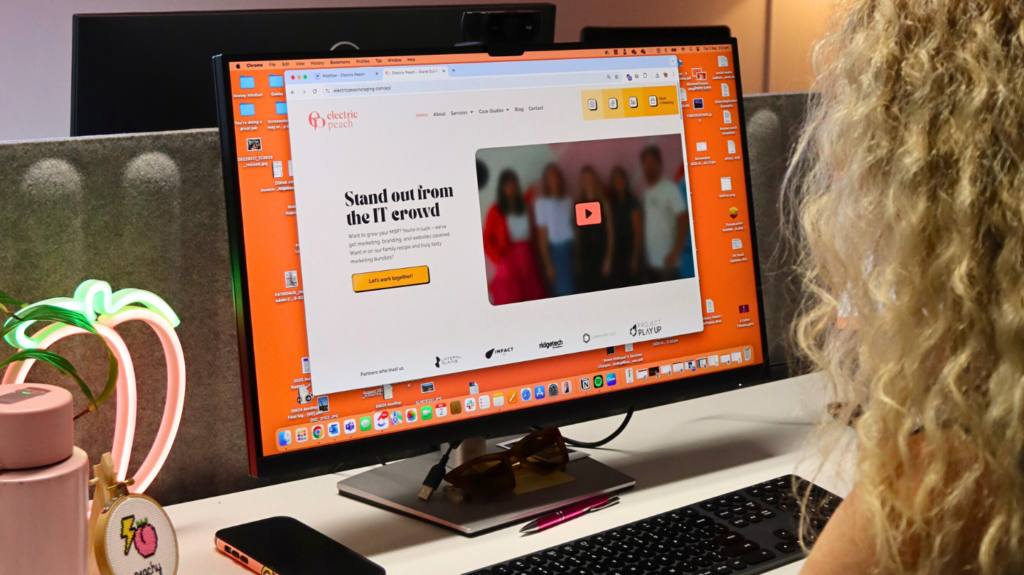
The result? Overly complex jargon, outdated layouts, and missed opportunities to generate leads.
That’s exactly why our peachy crew has put together this guide, so you can create something that not only looks great but also converts curious visitors into long-term clients.
The Reason Your MSP Website Could Be Failing
Let’s be honest, MSP websites have a bit of a reputation. Too often, they fall into the same traps:
- Too much tech talk: Listing every tool and feature but not explaining why it matters to the client.
- No clear customer journey: Visitors can’t figure out where to click or how to get started.
- Outdated design: A tired layout makes your MSP look less credible than it really is.
- Weak SEO: Without proper keywords, structure, or meta data, your website is invisible to search engines.
- Poor lead generation: No clear calls-to-action, missing forms, or a lack of helpful resources.
The good news? With the right approach, you can avoid these downfalls and build a website that works as hard as you do!
The Three Essentials: UX, SEO, and Storytelling
Every great MSP website is built on three pillars:
1. User Experience (UX)
Your website should be easy to navigate, mobile-friendly, and designed with your audience in mind. Think: clear menus, intuitive layouts, and fast-loading pages.
2. Search Engine Optimisation (SEO)
Strong SEO is the difference between a hidden site and one that gets found. This means optimised keywords, proper meta data, and a solid technical foundation like quick load speeds and clear content structure.
3. Storytelling
People don’t buy IT services; they buy outcomes. Use client-friendly language, case studies, and real-life testimonials that explain how your services solve real problems. Translate the tech into benefits.
Together, these three elements build trust, keep visitors engaged, and can even turn clicks into clients.
A Step-by-Step Guide to Building a High-Performing MSP Website
Wondering how to begin building a website for your MSP? We’ve put together a roadmap below.
- Discovery
Define your goals, your target audience, and the services you want to highlight. - Wireframes and Design
Map out the customer journey and create a design that reflects your brand personality. - Copywriting
Ditch the jargon. Write benefit-driven copy that speaks directly to clients about outcomes. - Build and Integrations
Choose the right platform (WordPress, Webflow, etc.), add SEO plug ins, integrate security, and set up forms and automations. If you’re not sure about which platform to choose, you can learn more about the different options here. - Testing and Launch
Check mobile responsiveness, page speed, analytics, and conversion points (such as newsletter sign up, contact forms, call buttons etc.) before hitting publish. - Ongoing Updates
A great website is never “done.” Regular updates and fresh content ensure your site is optimised – keeping your site working for you.
This process might seem overwhelming, so if you’d like help building a website that ticks every box our team of experts are here to help.
The Electric Peach Website-as-a-Service Model
Here’s where we do things differently. Instead of handing you a shiny new website and walking away, we offer Website-as-a-Service (WaaS).
That means:
- We take care of continuous updates and optimisation, so your website grows as your business does.
- You get full support, and we handle the behind the scenes so you can focus on clients.
It’s not a one-and-done build; it’s a partnership designed to keep your website fresh, functional, and always ready to convert.
Your MSP Website Should Work for You
Your MSP website isn’t just a digital brochure – it’s a powerful growth tool. With the right mix of UX, SEO, and storytelling (plus ongoing optimisation), you can create a site that speaks to your values and makes the customer journey a much easier one.
And the best part? You don’t have to figure it all out on your own.
If you’re ready to get started, get in touch for a chat about building your MSP website!