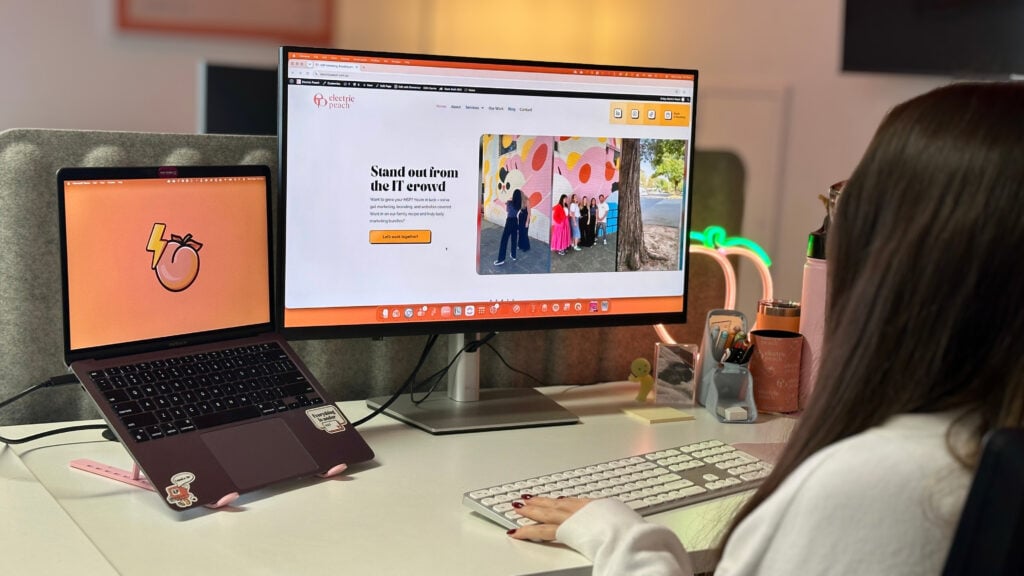
Luckily, I’ve got the know-how and experience to help you stand out from the IT crowd – an industry I’ve been a part of for many years. Today, my marketing company Electric Peach has worked with MSPs all around Australia to define their brand position, show up consistently with their marketing efforts, and connect with their customers.
Throughout this journey, I’ve noticed common marketing mistakes MSPs keep making. So, let’s jump into them below and see whether your efforts need a refresh to make an impact.
1. They don’t have a marketing strategy
Everyone in my team knows how much I love a strategy, and for good reason – without one you’re essentially going in blind. Strategies are key to help you define your marketing and business goals, and to create a step by step plan to achieve them. This process also involves defining your ideal target audience, from who they are to their values, pain points, and how you can help, which is critical to guide everything from how your brand looks to how you communicate.
Time and time again, I see businesses without a strategy get easily distracted and try things just for the sake of it, which isn’t great for your overall goals. On the other hand, I see MSPs put strategy, action plans, and marketing altogether into the ‘too hard’ basket which leaves them relying solely on referrals to attract new clients.
Want marketing that builds your brand awareness, reputation, trust, and loyalty? All are key to promote customer stickiness, engage your audience (existing and potential customers included), and help you to make a mark with an aligned brand. Repeat after me: I need a strategy.
2. They use generic, automated posts and content
There are solutions on the market that can help you get your marketing up and running in a matter of moments. Plug and play, and don’t give it a second thought. Sounds great, right?
Well, these solutions could be doing more harm than good. When you post automated, generic content you lose the ability to position your company in the market, build your brand, or connect with your desired target audience. I’ve seen cases of businesses in the same town or region using identical blogs and social media content because they were subscribed to the same platform. Ask yourself – if a potential client was looking at each of these profiles, what’s there to make you stand out? In short, nothing.
In the end, it all comes back to having a personalised and tailored marketing strategy. This ensures you can create content in line with your brand positioning and audience, and helps you attract new prospects while staying top of mind for existing clients.
3. They aren’t using the right language (aka no more tech jargon)
One of the first things I ask to see from new clients is their proposal or pitch decks. As a business owner who’s been working in the industry alongside MSPs for a solid amount of time, if I can’t understand your managed services proposal – it’s too technical.
Often business owners and decision makers are outcome focused, yet a lot of the proposals I see from MSPs focus on the technical side or technology. Yes, your partners and tools are important, but unless you’re working with IT managers in a co-managed arrangement, you need to think of the outcomes for the client.
How can you achieve this? Spend time defining your target audience and their frustrations. This will shape how you speak to them, and the benefits you need to highlight. Once you’ve got this, remember to stay away from the tech jargon and communicate in a language they can understand.
The same litmus test goes for your other marketing channels from websites to content, socials, and even your events. Always keep who you’re talking to at the front of mind and write for them – not for you.
How Our Peachy Crew Can Help
Any of these mistakes sounding familiar? I’m not judging (promise) – but I can help. At Electric Peach, we work with MSPs across Australia, elevating their marketing with a structured plan that champions informed strategy and aligned branding. If you’d like to learn more about our work, I’d love to chat. Reach out here and I’ll be in touch.